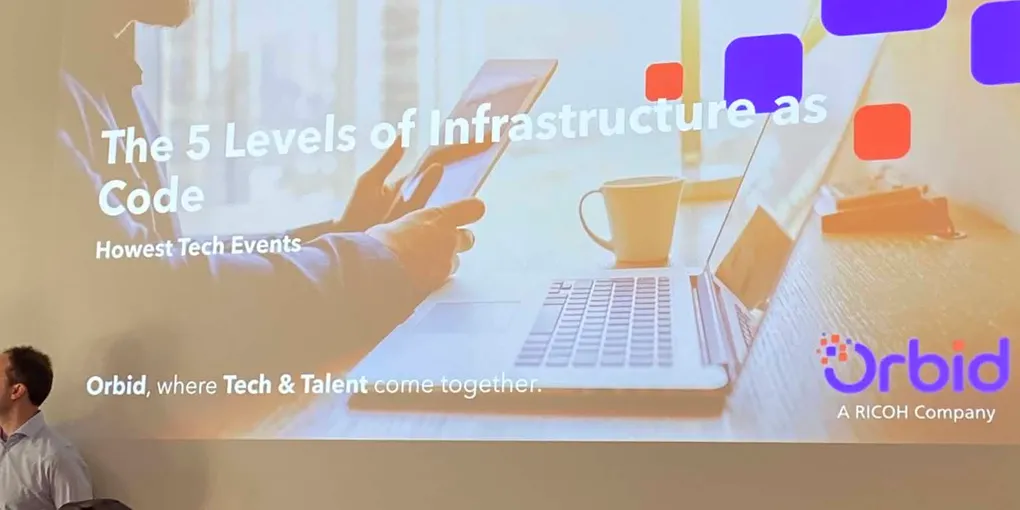
T&M4: The 5 Levels of Infrastructure as Code
The session on Infrastructure as Code (IaC) I attended gave a clear overview of how cloud infrastructure evolves from manual configuration to fully automated and governed systems. The speakers were Tim Van Roosbroeck and Dimitry Decan, who explained the topic from both a strategic and technical point of view. The event mainly targeted a technical audience interested in cloud, DevOps, and Azure.
The main focus of the session was the five maturity levels of IaC. Everything starts with “ClickOps”, where infrastructure is created manually through the Azure portal. This is quick and easy, but it doesn’t scale well and often leads to inconsistencies over time. The next step is scripting, which already improves repeatability, but scripts can still become messy or spread across different teams.
After that, the session moved into declarative infrastructure using Azure Bicep. This was presented as a more structured and readable way to define Azure resources compared to traditional ARM templates. The focus here is mainly on defining what you want instead of how to build it. The modular approach in Bicep also stood out, because it makes larger projects easier to manage and reuse.
From there, the maturity model continues into CI/CD-driven deployments, where infrastructure changes go through pipelines instead of being applied manually. This adds more control, reduces human error, and makes deployments more predictable. The final stage is policy-driven infrastructure, where rules and governance are enforced automatically to ensure consistency, security, and compliance across environments.
What stood out most to me is that IaC is not just about technology, but also about how teams work together. As maturity increases, structure and discipline become just as important as the tools themselves. It becomes less about individual scripts or deployments and more about a shared system that everyone follows.
Some parts of the session were new to me, apart from the general idea of ClickOps which I had come across before. The other approaches to Infrastructure as Code were mostly concepts I had heard of, but I had never actually seen them demonstrated or used in practice. Because of that, the session mainly helped me understand how these ideas look when they are applied in real-world Azure environments.
Overall, I found the presentation and live demo clear and easy to follow, as it helped make the different maturity levels more concrete. However, the topic itself didn’t fully stand out to me in terms of personal interest, even though I do understand its relevance in modern cloud infrastructure. Still, it was a useful introduction and gave me a better sense of how Infrastructure as Code is used in practice.