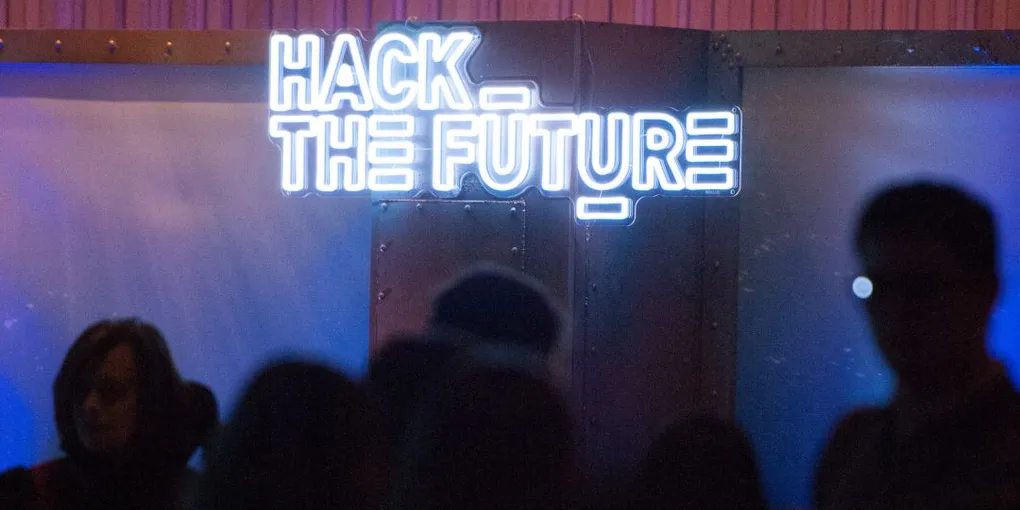
Hack The Future
Last week was the Hack The Future hackathon in Antwerp, an event sponsored by The Cronos Group that brings together students and IT enthusiasts to work on different technical challenges. Going into the event, I expected something heavily cybersecurity-oriented because of the “hackathon” aspect, but I quickly realized that many of the challenges were actually much more development and infrastructure focused.
Together with a teammate, I participated in Challenge 112: Deep Dive into Linux Waters. Our task focused on working with containers using Podman to host a website. Before this event, I had never worked with Podman before, nor had I ever created a container image completely from scratch, so there was a lot to learn in a short amount of time.
The challenge itself was both interesting and difficult because we had to learn while actively building the solution. We had to think about which base image to use, how to configure the container environment, what dependencies needed to be installed, and how to make everything work together correctly. Since both my teammate and I are more focused on cybersecurity than development, it also pushed us a bit outside our comfort zone. It had been a while since we had worked on more development-oriented tasks, which made the learning curve steeper but also more rewarding.
One thing I appreciated during the event was that the organizers were very approachable and knowledgeable. Whenever teams got stuck, there was always support available to point us in the right direction without simply giving away the solution. That balance made the challenge feel educational instead of frustrating.
Besides the hackathon itself, one of the highlights of the day was definitely the location. The venue was right next to the Antwerp Zoo, and participants received free tickets to visit during the lunch break. I ended up spending quite some time walking through the zoo, which was a surprisingly nice way to disconnect from the technical pressure of the competition for a moment. After spending hours troubleshooting containers and configurations, taking a relaxed walk around the animals helped recharge before continuing with the challenge.
Overall, the event gave me a better understanding of containers and Linux-based environments, especially from a more practical perspective. Even though the challenge was not fully aligned with my initial expectations or interests, I am still glad I participated because it exposed me to technologies and workflows I normally would not explore on my own. It also showed me how useful containers can be in both testing and production environments, and gave me a broader perspective on infrastructure and development within IT.